
LINK PBC Goes To Formnext Germany
FORMNEXT 2025
Standing in a booth in Germany with the Toddler Mobility Trainer (TMT) was one of those moments where a project suddenly feels much bigger than you expected.
What began as an open, collaborative design effort—shaped by a collaboration between LINK PBC, Tikkun Olam Makers, and MakeGood—was now part of a global conversation at Formnext, one of the world’s leading additive manufacturing expos. Over the course of a week, people from around the world stopped to ask questions, share stories, and - most importantly - talk about children, access, and what thoughtful design can unlock when it’s shared openly.
HOW THE TMT FIT IN
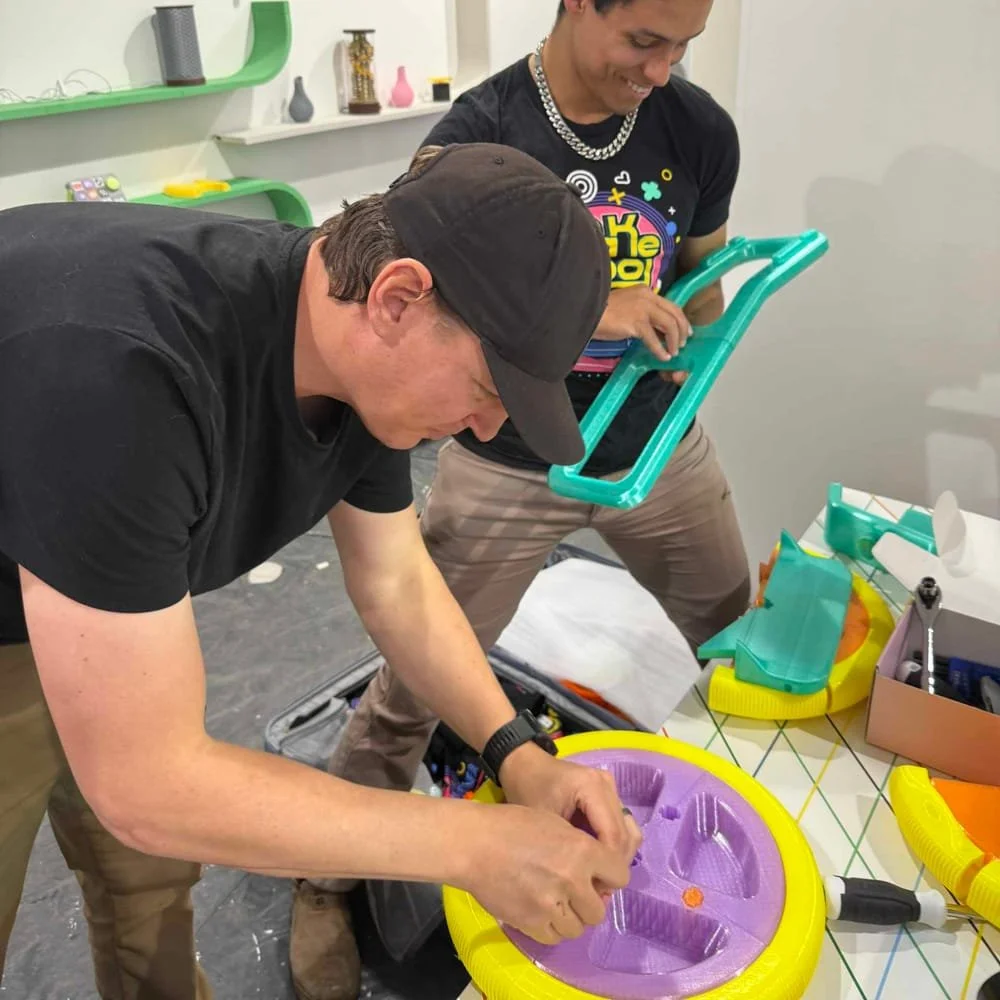
Formnext is a technical event at its core, but what stood out most wasn’t the machines or materials—it was how quickly conversations moved from how it’s made to who it’s for. Having the Toddler Mobility Trainer physically displayed made those conversations tangible. People didn’t just look at it; they engaged with it. They asked about the kids who use it, the caregivers who rely on it, and how design decisions can ripple outward into real lives.
Being invited as a guest into the Bambu Lab booth was an honor, and it set the tone for the week. The booth became a place where the technology and human focused solutions met—where a 3D-printed object could spark deeply personal discussions about mobility and play.
A SHARED MISSION
We’re incredibly grateful to Bambu Lab for the invitation and the support they showed throughout the event. Their belief in consumer additive manufacturing’s power to foster accessibility and education made this moment possible—and that belief didn’t stop at the expo.
We’re also thankful for our continued collaboration with MakeGood, whose work turns concepts into real-world impact. Displaying the Toddler Mobility Trainer in Germany wasn’t just about showcasing a design—it was about reinforcing a network of people committed to making assistive technology more accessible, adaptable, and human.
WHEN DESIGN LEAVES THE BOOTH
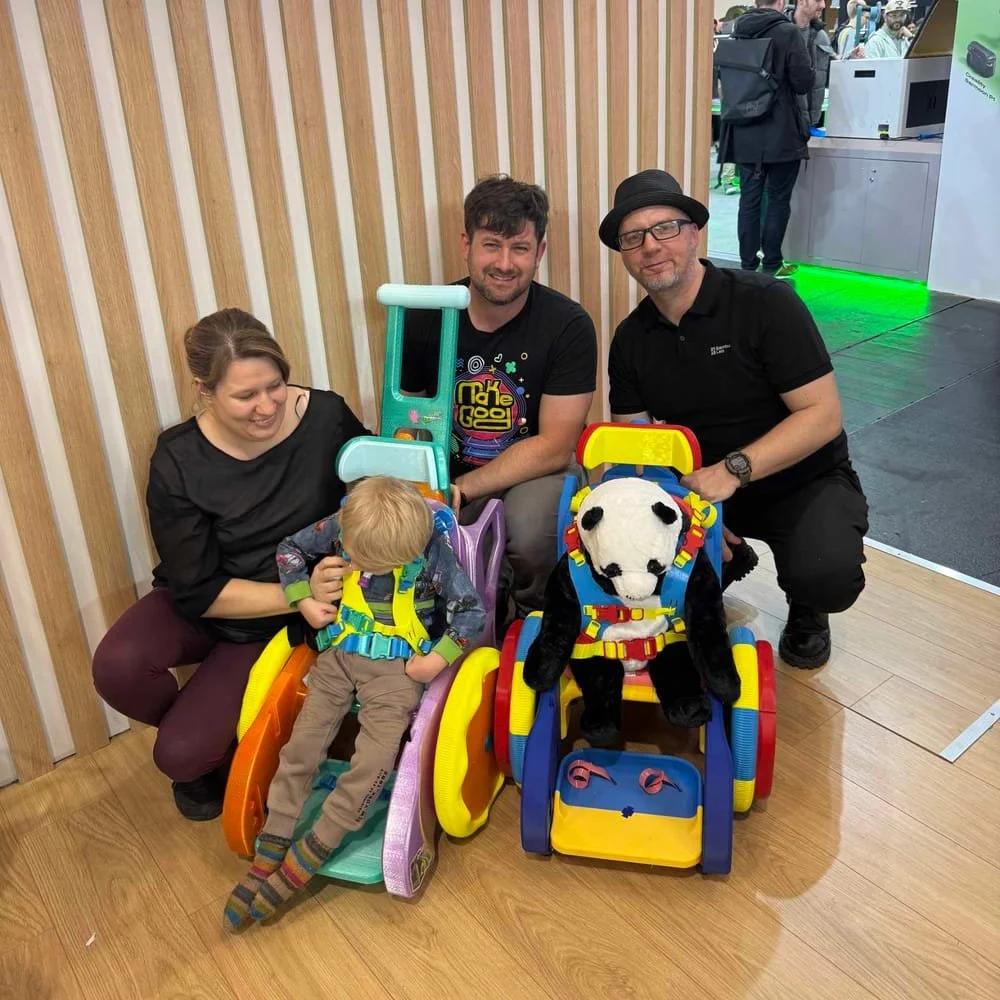
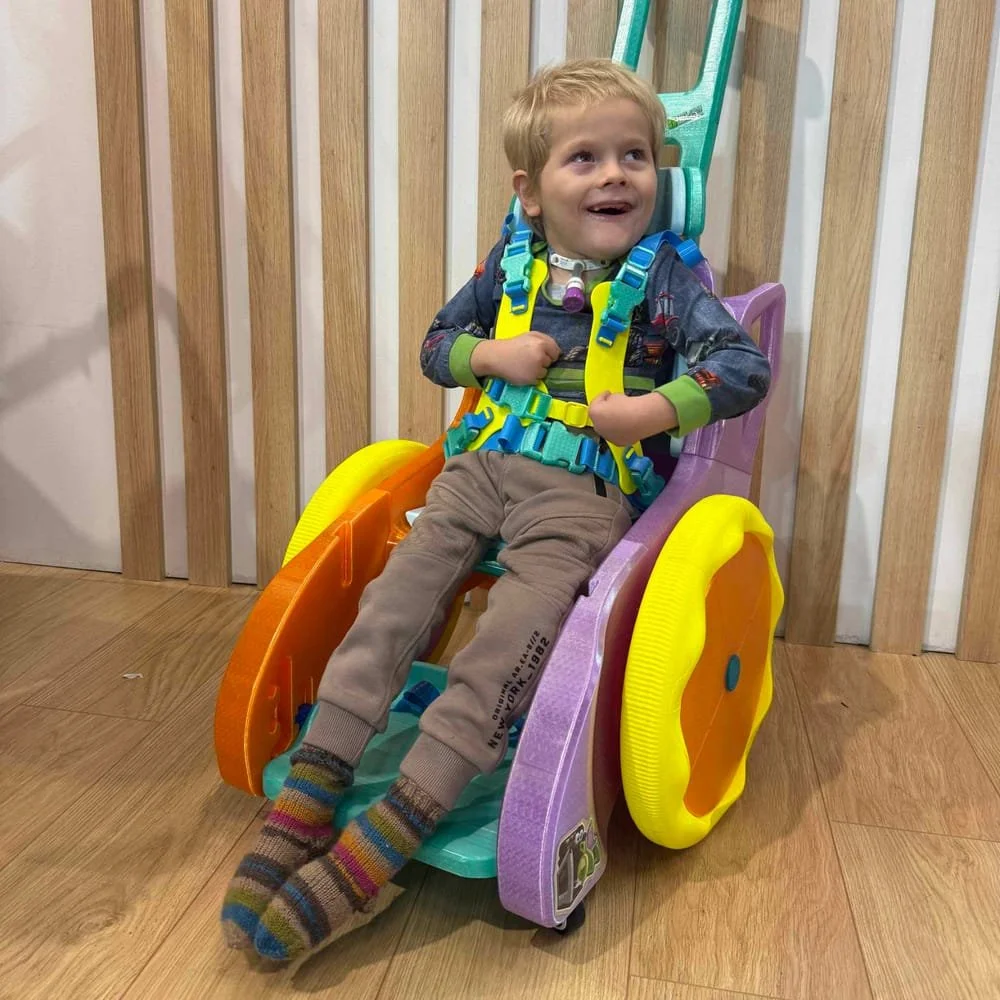
A family traveled to Formnext with their son, Keo, to see whether the Toddler Mobility Trainer might be a good fit for him. They came specifically to experience the chair in person—something that’s rarely possible. Seeing Keo sit in the trainer shifted the week into focus. The conversations, the prototypes, the printing—all of it mattered most in that moment. Design left the booth and became personal. Those moments are why we do this work.
WHAT’S ON THE HORIZON
The energy and curiosity we experienced at Formnext are directly shaping what comes next. We’re excited to bring that momentum back home through an upcoming Designathon hosted by CU Boulder, where students from industrial design and engineering backgrounds will work on expanding Toddler Mobility Trainer concept.
Thanks to Bambu Lab’s sponsorship, students will have access to the tools they need to explore, prototype, and question how assistive systems can evolve. The goal isn’t to find a single “right” solution—it’s to create space for learning, experimentation, and new ideas that have a similar impact.
We’re thankful to Bambu Lab, MakeGood, and the many individuals at Formnext who took the time to engage, ask thoughtful questions, and imagine what’s possible. And we’re excited to see how the next generation of designers and engineers will build on that energy in the months ahead.
Sometimes, a project needs to leave the studio to remind you why it matters. Germany did exactly that.